
Description
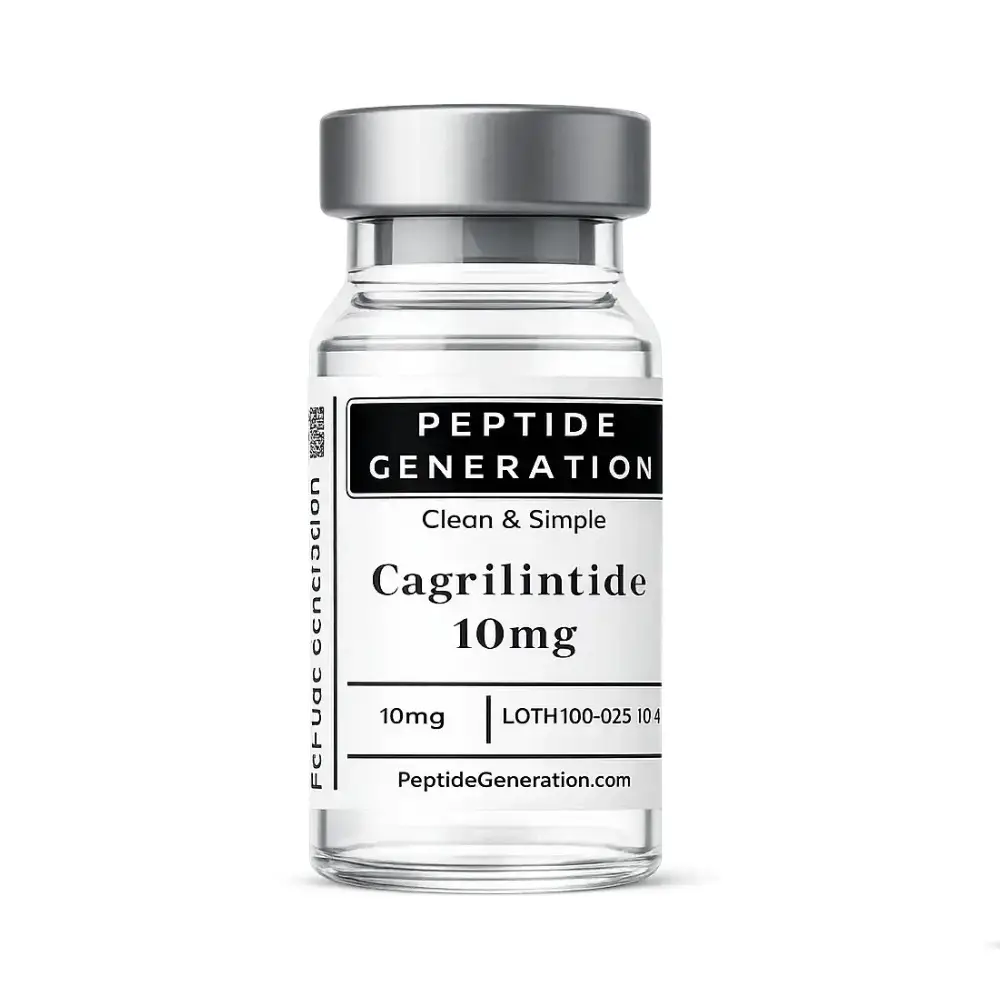
Cagrilintide 10mg Research Peptide
Cagrilintide 10mg is a synthetic amylin analogue supplied as a lyophilized research material for laboratory investigation. Its primary research interest centers on amylin receptor signaling, appetite-related pathways, gastric motility, and metabolic regulation.
Unlike GLP-1 receptor agonists, Cagrilintide is designed around amylin biology, giving researchers a distinct signaling system to investigate. This difference has also made Cagrilintide relevant to studies examining combined amylin and incretin pathways.
Product Specifications
| Specification | Details |
|---|---|
| Product | Cagrilintide 10mg |
| Research format | Lyophilized peptide |
| Quantity | 10mg |
| Category | Research peptide |
| Primary pathway | Amylin-related signaling |
| Research focus | Appetite, metabolic and gastrointestinal pathways |
What Makes Cagrilintide Different?
Cagrilintide is studied as an analogue of amylin, a peptide hormone naturally associated with pancreatic β-cell activity and co-secreted with insulin. Amylin signaling has an important role in research surrounding food intake, gastric emptying, and satiety-related processes.
For laboratory researchers, this provides a pathway that is biologically distinct from the GLP-1 system. That distinction is particularly relevant in experimental work comparing different appetite-regulating mechanisms or evaluating combined signaling approaches.
Research Profile
Research involving Cagrilintide peptide 10mg commonly examines several interconnected areas:
- Amylin receptor and related signaling
- Gastric emptying and gastrointestinal motility
- Appetite and food-intake regulation
- Satiety-associated signaling
- Energy balance and metabolic pathways
- Interactions between amylin and incretin systems
Cagrilintide has also received research attention alongside GLP-1-based compounds, including semaglutide, because the two signaling systems operate through different biological pathways. Such studies can help researchers distinguish the effects associated with amylin signaling from those associated with GLP-1 activity.
Why Researchers Study Cagrilintide
The scientific interest surrounding Cagrilintide extends beyond appetite-related research. Its amylin-associated activity makes it useful for investigating how hormonal signaling can influence food intake, gastrointestinal processes, energy regulation, and broader metabolic pathways.
It is also a useful research subject when comparing amylin signaling with GLP-1 signaling. Because these pathways are not identical, Cagrilintide can be examined independently or within broader experimental models involving multiple metabolic signaling systems.
Frequently Asked Questions
What is Cagrilintide 10mg?
Cagrilintide 10mg is a synthetic amylin analogue supplied as a laboratory research peptide for investigating amylin-related signaling and metabolic pathways.
What is Cagrilintide studied for?
Research areas include appetite regulation, gastric emptying, food-intake signaling, metabolic regulation, and interactions between amylin and incretin pathways.
Is Cagrilintide a GLP-1 peptide?
No. Cagrilintide is associated with amylin signaling rather than directly functioning as a GLP-1 receptor agonist. This distinction is important in comparative metabolic research.
Why is Cagrilintide studied with GLP-1 compounds?
Researchers have investigated the combination of amylin and GLP-1 pathways because they involve distinct signaling mechanisms that may be evaluated together in experimental models.
What is the difference between Cagrilintide 10mg and a Cagrilintide 10mg research peptide listing?
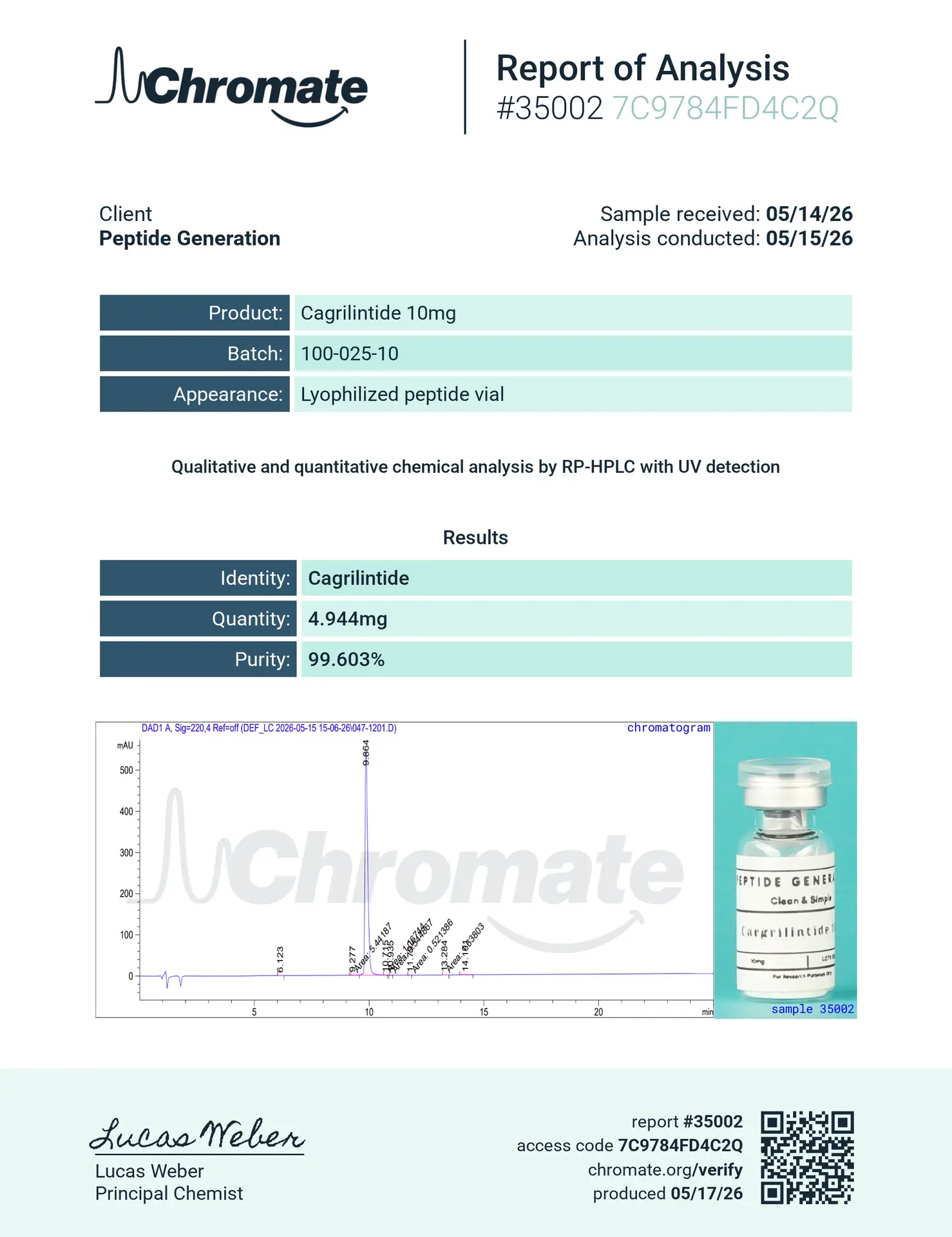
They refer to the same research material when the product specification identifies a 10mg Cagrilintide presentation. The important considerations are identity, quantity, analytical documentation, and batch information.
Is this Cagrilintide peptide intended for human use?
No. This material is supplied strictly for laboratory research.
Research use only. Not for human or veterinary use.



Reviews
There are no reviews yet.