

Description
GHK-Cu 100mg Research Peptide
GHK-Cu is a copper-binding peptide complex consisting of the tripeptide GHK (glycyl-L-histidyl-L-lysine) associated with copper ions. It occurs naturally in biological systems and has been extensively studied in extracellular matrix biology, cellular signaling, oxidative processes, and tissue-related molecular pathways.
The GHK-Cu 100mg presentation provides a defined quantity of copper peptide material for laboratory research. Its larger 100mg format can be useful for laboratories that require a clearly specified research quantity for peptide characterization, analytical work, or ongoing experimental studies.
Research use only. Not for human or veterinary use.
Material Specifications
| Specification | Details |
| Compound | GHK-Cu |
| Full name | Glycyl-L-histidyl-L-lysine copper complex |
| Quantity | 100mg |
| Material type | Copper-binding peptide complex |
| Research focus | Peptide signaling and copper-associated biological pathways |
| Research areas | Cellular signaling, extracellular matrix research, oxidative biology |
| Presentation | 100mg vial |
| Intended use | Laboratory research only |
Composition and Research Identity
GHK-Cu combines the short peptide sequence GHK with copper, creating a defined peptide-metal complex that has been the subject of biochemical and cellular research.
The copper component is particularly relevant when studying how peptide-metal interactions can influence biological processes. Researchers have investigated GHK-Cu in areas involving cellular communication, extracellular matrix components, oxidative processes, and pathways associated with tissue biology.
This molecular composition also makes GHK-Cu distinct from an uncomplexed GHK peptide. For laboratory work, identifying the material as the copper-associated form is therefore an important part of research documentation.
Areas of Scientific Interest
GHK-Cu has been investigated across several areas of biological research rather than being associated with a single pathway.
Research interest includes:
- Extracellular matrix biology
- Cellular signaling
- Copper-dependent biological processes
- Oxidative stress research
- Peptide-metal interactions
- Molecular pathways associated with tissue biology
The precise activity observed can depend on the experimental system, analytical methodology, and study conditions. Research findings should therefore be evaluated within the context of the specific model being used.
100mg Research Presentation
A GHK-Cu 100mg vial provides a defined quantity of copper peptide material that can be catalogued as part of a laboratory research inventory.
The 100mg presentation can be relevant for research programs where a larger defined quantity is preferred for multiple analytical or experimental workflows. It also gives researchers a straightforward quantity reference when recording material alongside project documentation.
The listed 100mg amount describes the supplied research presentation. It is not a recommended experimental quantity or administration amount.
Analytical Considerations
Because GHK-Cu is a peptide-metal complex, researchers may consider both peptide identity and copper association when evaluating research material.
Relevant documentation may include:
| Information | Research relevance |
| Peptide identity | Establishes the molecular material being evaluated |
| Copper association | Distinguishes the copper complex from unbound GHK |
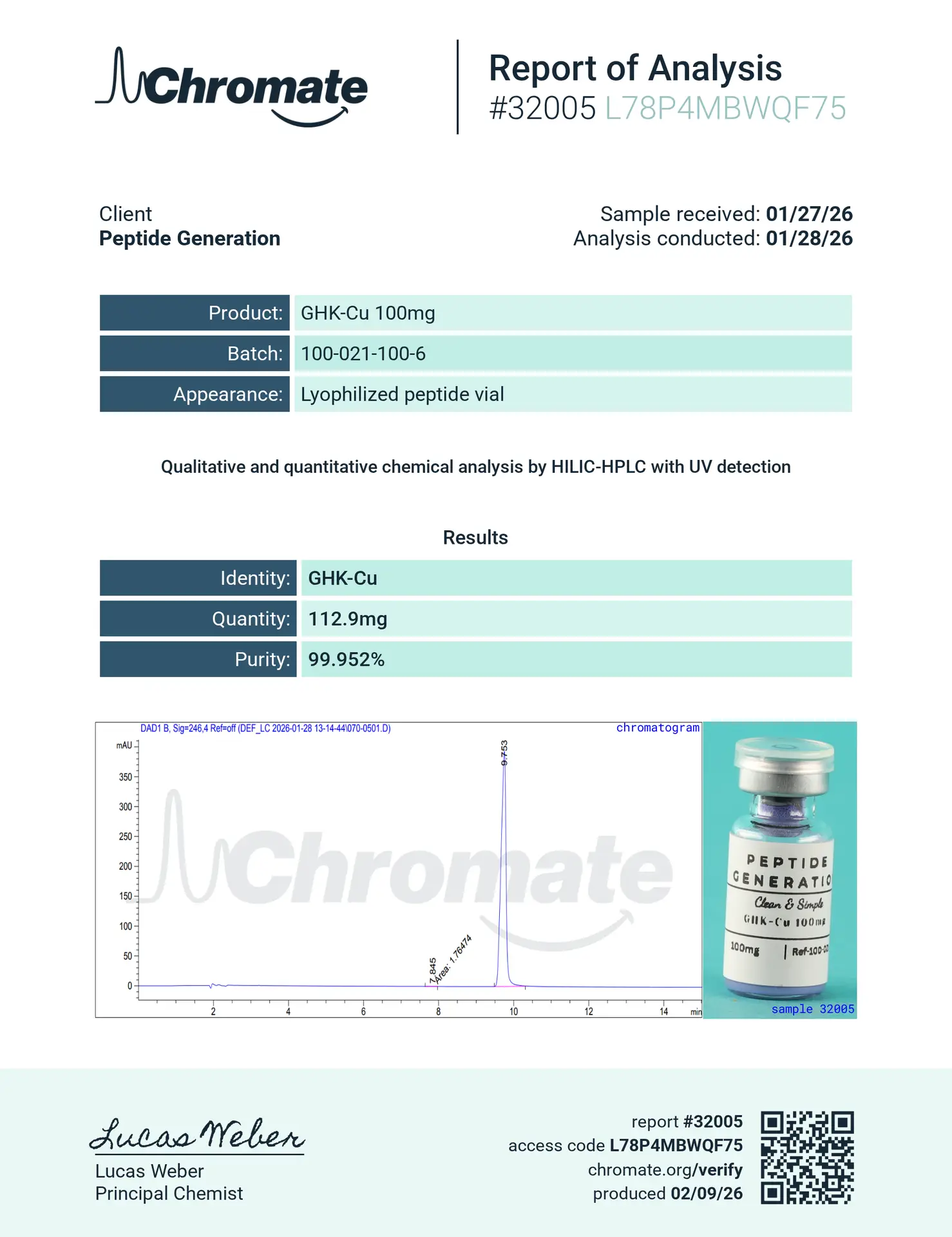
| Quantity | Confirms the stated 100mg presentation |
| Lot information | Supports batch-level traceability |
| Analytical testing | Provides characterization information where available |
| Storage information | Supports appropriate material handling |
For laboratories using analytical methods such as mass spectrometry, chromatography, or elemental analysis, the appropriate characterization approach will depend on the research objective and laboratory methodology.
GHK-Cu in Peptide Research
GHK-Cu is an interesting research material because it brings together two areas of biochemical investigation: short peptide signaling and metal-associated biology.
Researchers can examine the compound in studies focused on peptide structure, copper interactions, cellular pathways, extracellular matrix-related mechanisms, and oxidative biology. This makes it relevant to multidisciplinary research involving peptide chemistry, molecular biology, and cellular systems.
The presence of copper is an important part of the compound’s identity, so research documentation should distinguish GHK-Cu from the peptide sequence alone.
Material Selection
When evaluating GHK-Cu 100mg research peptide material, researchers may wish to consider more than the listed quantity. Clear identification, analytical documentation, lot traceability, and appropriate storage information can all contribute to better laboratory recordkeeping.
A well-documented GHK-Cu 100mg compound can be incorporated into a research inventory with its material specifications retained alongside the relevant experimental records.
Frequently Asked Questions
What is GHK-Cu?
GHK-Cu is a copper-associated complex of the tripeptide GHK, or glycyl-L-histidyl-L-lysine. It has been studied in biochemical and cellular research involving peptide signaling and copper-related biological processes.
What does GHK-Cu 100mg contain?
This presentation provides a specified 100mg quantity of GHK-Cu research material in a vial.
What is GHK-Cu studied for?
Research has examined GHK-Cu in areas including cellular signaling, extracellular matrix biology, copper-associated pathways, oxidative biology, and peptide-metal interactions.
Is GHK-Cu the same as GHK?
No. GHK refers to the tripeptide sequence glycyl-L-histidyl-L-lysine, while GHK-Cu refers to the copper-associated form of that peptide.
Why is copper important when identifying GHK-Cu?
Copper is part of the GHK-Cu complex and distinguishes it from the uncomplexed GHK peptide. Researchers should therefore consider both peptide identity and copper association when characterizing the material.
What should researchers review before selecting GHK-Cu?
Useful factors to review include compound identity, copper association, quantity, lot information, analytical documentation, storage requirements, and research-use designation.
Is GHK-Cu 100mg intended for human use?
No. This material is supplied strictly for laboratory research and is not intended for human or veterinary use.
Research use only. Not for human or veterinary use.


Reviews
There are no reviews yet.